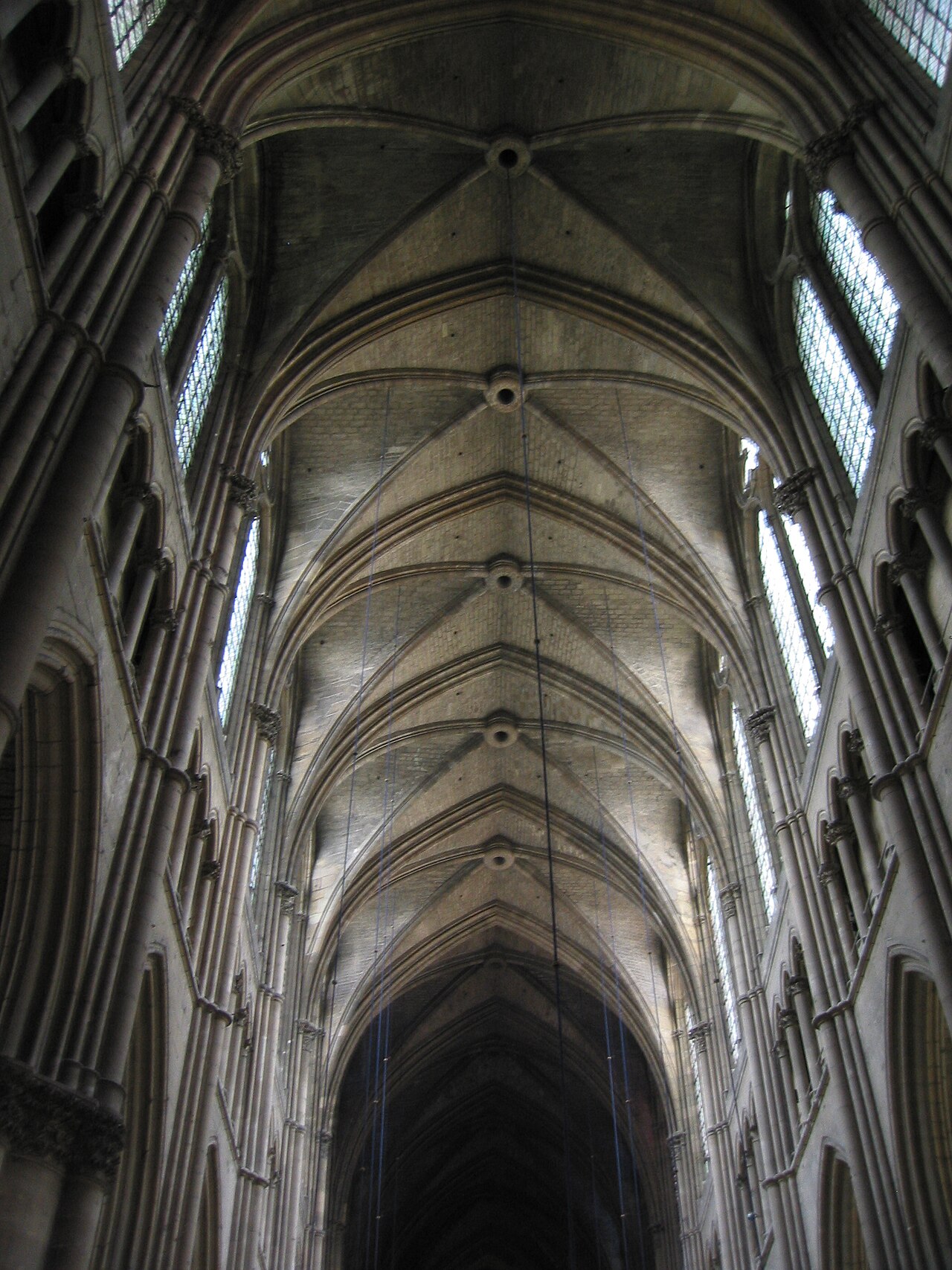
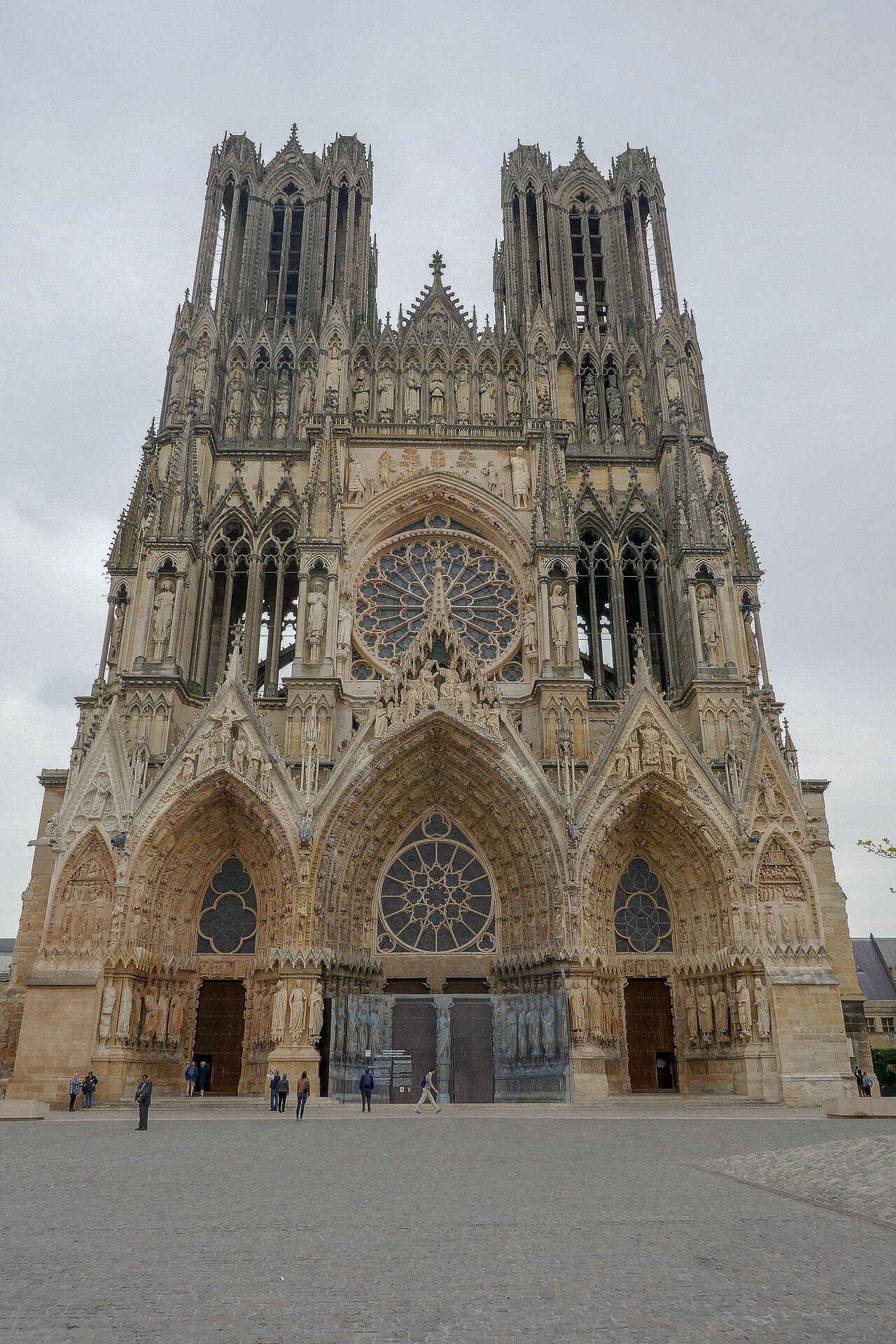
On 13 December 1974 Tangerine Dream played Reims Cathedral, the church where the kings of France were crowned for more than six hundred years. Three thousand people were expected. More than six thousand came. It was the first concert of its kind in a European cathedral, Nico opened it, and by the end of the night the Church had decided it would be the last.
- When
- Friday 13 December 1974, evening
- Where
- Cathédrale Notre-Dame de Reims, Champagne, France
- Who
- Edgar Froese, Christopher Franke, Peter Baumann. Nico opened
- Numbers
- 3,000 expected, over 6,000 in the building
- Record
- A tape survived. It came out officially in 2021 as Live at Reims Cathedral 1974, the first of the Official Bootleg Series
- Aftermath
- The Church declined every further booking; the cathedral tour moved to England in October 1975
Why a cathedral
Partly acoustics. A twenty-minute piece with no drums and a lot of Mellotron wants a room that takes six seconds to stop echoing, and a Gothic nave is exactly that room. Partly the promoter, who understood that this music was closer to a liturgy than a rock show and sold it that way. And partly Froese, who had trained as a painter and knew what it would look like: three figures, a wall of wood panelled machines, and behind them a rose window that had survived two world wars. The photographs from that night are the reason this music has always been associated with the sacred, which is odd for a band whose first album featured a burning piano.
What went wrong
Too many people, and no toilets. The cathedral has none for the public, the doors were opened to everyone who turned up, and the concert ran late. The rest is what anyone would expect. What the clergy objected to afterwards was not the music but the pews: kissing, cannabis, and a building treated as a venue.
The response came in two sizes. A small Counter Reformist tract denounced the people who had "desecrated this historic and venerable site" and demanded that Rome reconsecrate it. That was a fringe pamphlet, not a Vatican act, and the reconsecration it called for is the part of the story most often repeated as though it had happened. What did happen is the ban. Church authorities across Europe were instructed that Tangerine Dream were not to play on Catholic property again, and they never did.
What it changed
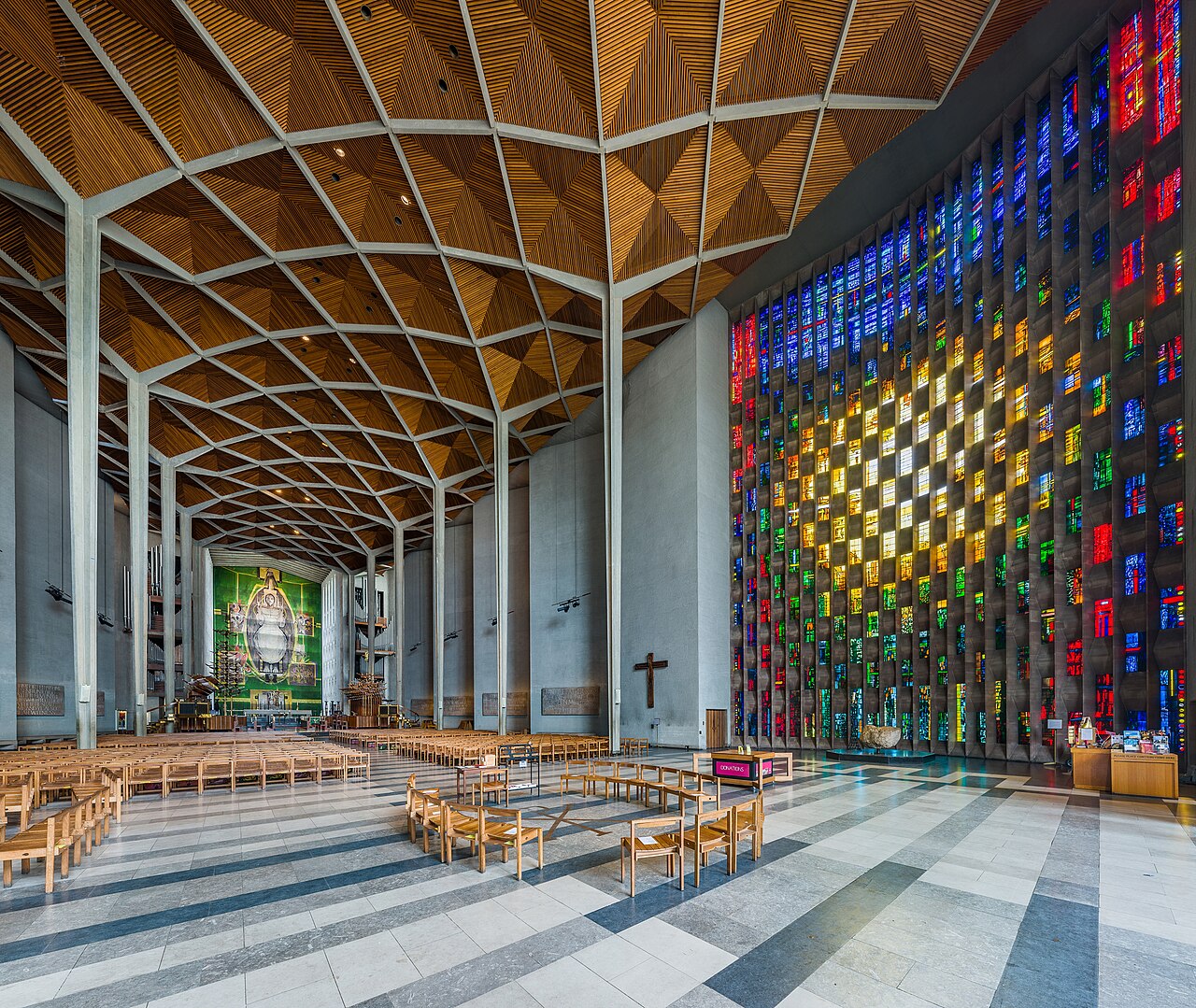
Three things. It made Tangerine Dream a live band, which they had not really been. The British tour that followed in October 1975 ran to twelve dates and took in Coventry Cathedral, Liverpool Cathedral and York Minster; Ricochet, assembled from that autumn, is the best live record of the era. It fixed the image, the machines and the stained glass, that every Berlin School act has borrowed since. And it put the band on the front of the French music press in the same season that a young Frenchman called Jean-Michel Jarre was working on his own first record. Two years later he released Oxygène.
Also this month, December 1974
- Klaus Schulze's Picture Music is finished and about to appear; Brain puts it out in the new year. Sources disagree on when it was actually recorded, 1973 or late 1974, and the sleeve is no help.
- Kraftwerk's Autobahn is on its way into the American charts, and for a few months "German electronic music" means something in New York.
- Phaedra has been selling in Britain since the spring, which is the only reason a German band could fill a French cathedral at all.
Next month: January 1975, and the sessions for Rubycon.