The short version
- Phaedra → Rubycon → Ricochet → Stratosfear → Force Majeure. In that order.
- One track each, full length, on real speakers.
- Leave Zeit, Electronic Meditation, Cyclone and the film scores for your second month.
- One of the five will be the one. It is always one of them.
Tangerine Dream have released more than a hundred albums across fifty-eight years and at least fifteen line-ups. That is the single biggest reason people never get into them. You look at the catalogue, you pick one at random, it is a 1990s film score or a seventy-minute drone from 1972, and you decide this music is not for you. It probably is. You just started in the wrong place.
This guide is for someone who has never heard them. It gives you five records, in a deliberate order, and tells you which single track to play first on each one. The order matters: each album teaches you how to hear the next. At the end there is a list of records to leave for later, including some famous ones, and a rough map of the eras so the catalogue stops looking like a wall.
Before you press play
- Use headphones or proper speakers. This music lives in the low end and in the space between the speakers. A phone speaker will make it sound like nothing.
- Give each track its full length. The pieces are fifteen to twenty minutes because they need to be. The first five minutes are the door, not the room.
- Do something else while it plays. Read, walk, drive at night. This is not music that rewards staring at it.
The five, in order
Phaedra
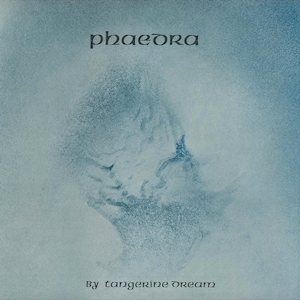
Start here because everyone starts here, and everyone is right. This is the record where the sequencer, the machine that repeats a short pattern of notes forever, became the centre of the music. It is also the one with the famous accident: the Moog drifting out of tune in a cold English studio, and the band keeping it. If the title track does nothing for you at all, this music may honestly not be for you, and that is fine. If it does something, even something you cannot name, keep going.
Rubycon
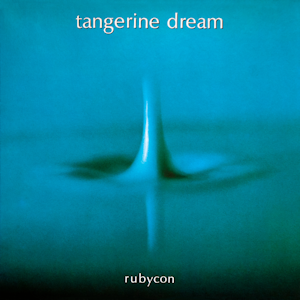
The same three people, one year later, doing the same thing on purpose. Two tracks, one per side, each seventeen minutes. Where Phaedra stumbles into its shape, Rubycon walks in knowing exactly where the furniture is. Many long-time fans think this is the best record they ever made. It is certainly the most complete. Listen to it second so you can hear what a year of practice did.
Ricochet
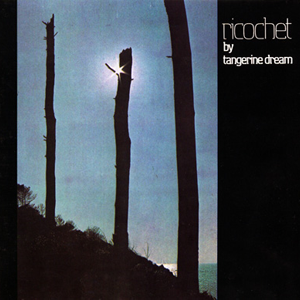
The live album, and the one to play for anyone who thinks this music is background. Recorded in cathedrals and concert halls across France and Britain, then cut together in the studio, it is faster and harder than anything before it. Franke's sequencer on Part Two is the closest this band ever got to rock and roll. If the first two records were landscapes, this is weather.
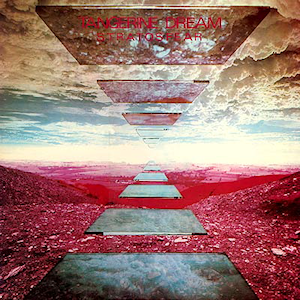
Stratosfear
Now the melodies come in. Guitars, harmonica, a grand piano, actual tunes you could hum. Shorter tracks, four instead of two. Stratosfear is the bridge between the pure sequencer years and the more composed, more American music the band would make in the eighties. Play it fourth so you can hear the change as a choice and not a surrender.
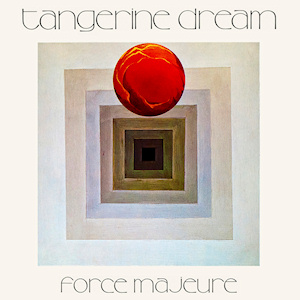
Force Majeure
Baumann has left; a drummer has arrived; there is a cello. This is the big, orchestral, almost symphonic end of the classic period, and the record where the band sounds most like a band. It is the last essential record before the eighties, and the one to play for someone who likes Pink Floyd and needs a way in.
Five albums, two hours. Then what?
If you have played all five and want more, you now know enough to find your own way. Broadly: if you loved Phaedra and Rubycon most, go backwards into the early seventies, and then sideways into Klaus Schulze, who made the solo version of that sound for the next forty years. If you loved Stratosfear and Force Majeure, go forwards into the film scores and the early eighties. Either way, the map below will help.
The Pink Years
Ohr Records, the pink label. Drones, noise, cosmic improvisation. Hard going, sometimes wonderful.
The Virgin Years
The sequencer era. Everything in this guide. If you only ever explore one era, this is it.
The Blue Years
Digital gear, shorter tracks, film scores. Thief, Tangram, Hyperborea. Franke leaves in 1987.
After Franke
Froese with new line-ups until 2015, then Thorsten Quaeschning leading. Uneven, with real highs since 2017.
Save these for later
Not bad records. Wrong first records. Each of these is somebody's favourite, and each of them has stopped somebody else from ever listening again.
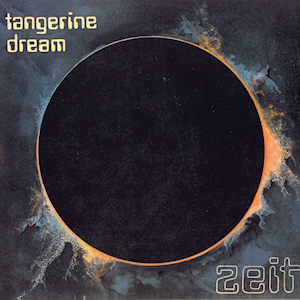 Zeit1972Seventy-five minutes, no pulse, four cellos. A masterpiece if you are ready. You are not ready yet.
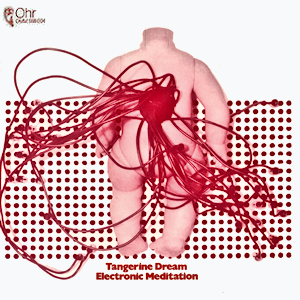 Electronic Meditation1970The only album with Klaus Schulze. Noise, tape, a burning piano. Historically vital, musically hard.
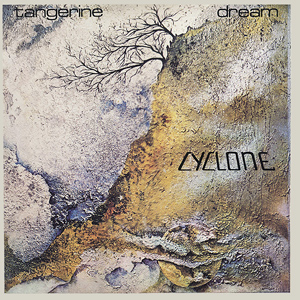 Cyclone1978The one with a singer. Fans still argue. Not the place to form an opinion.
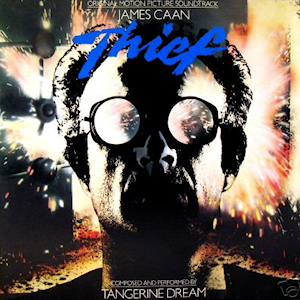 Thief1981A great film score, and the start of a very different band. Come back after the five.